What is considered good drinking water in Slovakia?
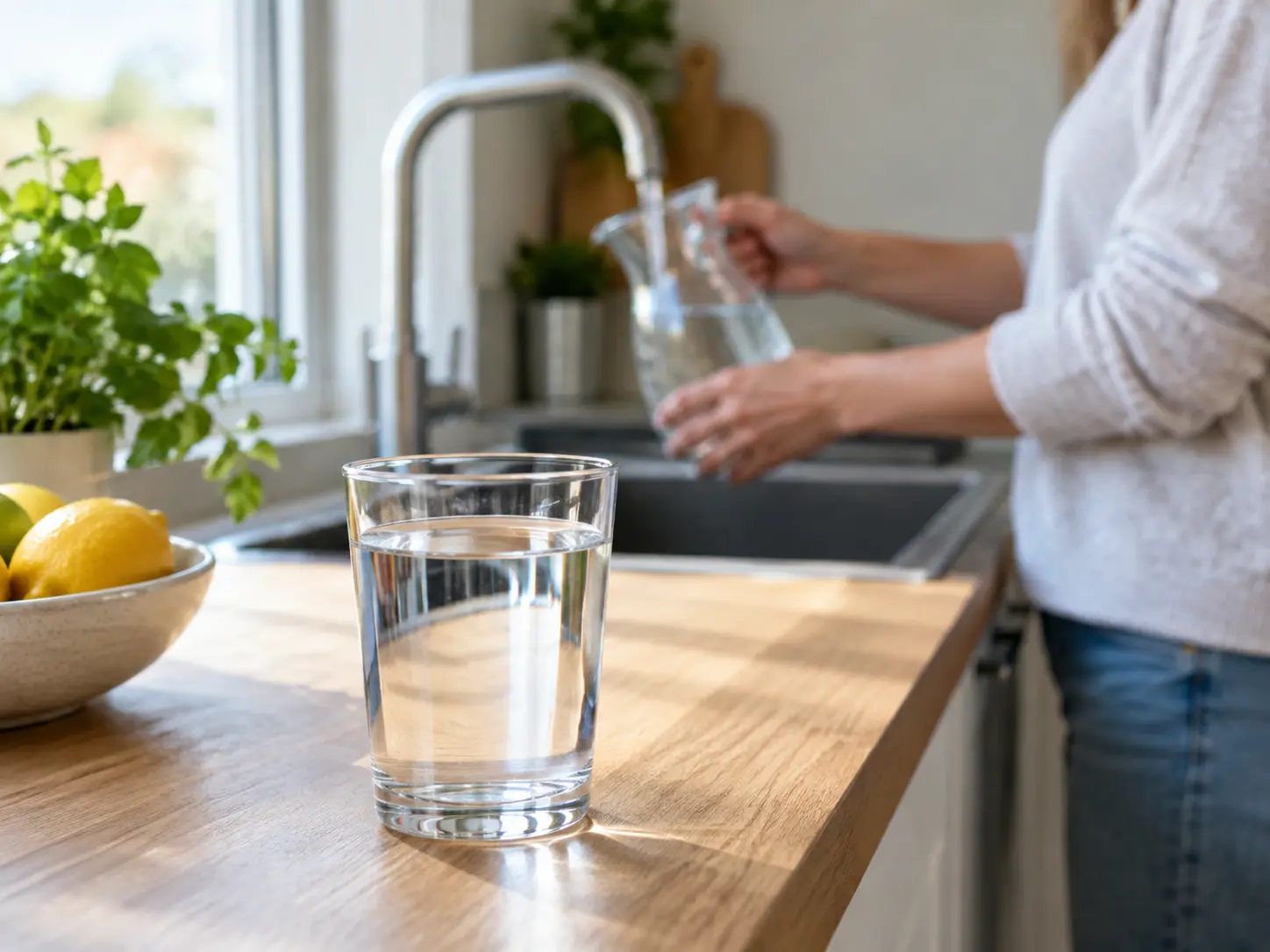
Good drinking water is not simply water that is clear, odorless, and tastes pleasant. When assessing drinking water, microbiological, chemical, and other monitored indicators are crucial, along with their comparison to the requirements applicable to drinking water. It is also important to know where the water comes from, how the sample was taken, and for what purpose the result is being evaluated.
In Slovakia, the requirements for the quality of drinking water are primarily regulated by the Decree of the Ministry of Health of the Slovak Republic No. 91/2023 Coll. The European framework is based on Directive (EU) 2020/2184 on the quality of water intended for human consumption.
What does it mean that water is potable?
Drinking water must meet the quality requirements for water intended for human consumption. Not just one parameter is evaluated.
Various groups of indicators are monitored, for example:
- microbiological indicators,
- chemical substances,
- physical and sensory properties,
- selected indicative indicators,
- depending on the situation, other risks relevant to the specific source or supply system.
This also means that the statement "this water is safe to drink" cannot be reliably based on just one measurement, such as hardness, pH, or iron content.
The extent of the necessary examination depends on the water source, the purpose of the analysis, and the specific risk.
Clear water without odor may not be drinkable
Appearance, taste, and smell are important properties of water, but they alone cannot confirm its health safety.
There may be substances or microorganisms present in water that cannot be seen with the naked eye and cannot be distinguished by taste or smell. A typical example includes certain microbiological indicators, nitrates, or trace chemical substances.
The opposite situation also applies. Cloudiness, discoloration, or an unpleasant odor indicate a problem, but the symptom itself does not determine its cause.
For example, brown coloring may be related to iron, but without measurement, it is not possible to reliably determine what exactly is present in the water and at what concentration.
Microbiological quality of drinking water
Microbiological contamination is an important part of water safety assessment.
During the analysis, specific microbiological indicators are monitored. Among the well-known are, for example, Escherichia coli (E. coli) and intestinal enterococci. However, the significance of individual microbiological indicators is not identical, and the result should be interpreted according to the specific parameter, sampling location, and circumstances of the source.
A one-time result also describes a specific sample taken. It does not automatically mean that the condition of the source cannot change later.
When it comes to a private well, the risk can be influenced by, for example:
- technical condition and security of the well,
- infiltration of surface water,
- flood or intense precipitation,
- inconsistencies,
- long downtime,
- condition of home wiring,
- previous disinfection or other intervention in the system.
If the microbiological analysis reveals a problem, the next step does not automatically mean just the installation of equipment. First, it is necessary to assess the possible cause of contamination and the condition of the source and distribution systems.
Chemical quality of water
The chemical part of the analysis can monitor a large number of different indicators. Their significance depends on the source of the water and the purpose of the examination.
Water from a well can be addressed depending on the location and circumstances, for example:
- nitrates and nitrites,
- iron and manganese,
- ammonium ions,
- selected metals,
- pesticides or other organic substances,
- pH,
- other parameters related to the geological substrate or the surroundings of the source.
Not all detected deviations represent the same type of problem. Some indicators are important from a health safety perspective, while others are primarily important in terms of taste, appearance, corrosion, sediment formation, or equipment operation.
Therefore, when analyzing the results, it is important to look not only at which data is marked as non-compliant but also at its significance and its connections to other parameters.
Hard water is not automatically dangerous water
Water hardness is a good example of the difference between a technical property of water and the assessment of its health safety.
Higher hardness can cause the formation of limescale, deposits on fixtures, and problems in heaters or household appliances. However, hardness alone does not indicate whether the water meets all other monitored parameters.
Similarly, one cannot automatically conclude from low hardness that the water is "better."
When deciding on water treatment, it is therefore necessary to distinguish:
- health reason,
- technical problem,
- sensory property,
- request for comfort.
The public water supply and a private well are monitored differently
Water from the public water supply
Public drinking water supply is subject to a monitoring system, risk management, and requirements set by legal regulations.
However, the quality of water can also be affected by parts of the system beyond the delivery point, such as the condition of the household plumbing. If the problem occurs only in a specific building or at a single delivery point, it is necessary to consider the internal distribution as well.
When it comes to water from a public water supply, it is not appropriate to automatically assume that every undesirable taste, odor, or sediment indicates a health risk.
Water from a private well
With a private water source, it is not possible to estimate the water quality based on the depth of the well, the appearance of the water, or the experiences of neighbors.
Two nearby wells may have different compositions, and the problem can also change over time. A current water analysis therefore represents a fundamental basis for assessing the specific situation.
It is also important to know:
- where the sample was taken from,
- whether it is raw or already treated water,
- when was the collection made,
- as it was performed,
- whether disinfection or another intervention took place before the collection.
What water analysis can do – and what cannot be inferred from it
Water analysis provides information about the parameters that were actually examined in the specific sample.
If a certain substance or microbiological indicator was not part of the analysis, it cannot be concluded from the report that it is not present in the water.
It is also true that one older result may not reliably describe the current state of a changing source.
When interpreting, it is therefore necessary to know at least:
- water source,
- collection date,
- place and method of collection,
- the scope of examined indicators,
- the purpose for which the result is intended.
If the result is needed for approval, opening a business, or another official purpose, the required scope of tests and the method of sampling should be verified before the actual sampling.
When does it make sense to do a new water analysis?
A new or review analysis should be considered especially when:
- will start using a new or longer-idled source,
- there will be a flood, malfunction, or interference with the well,
- the appearance, taste, or smell of the water will change significantly,
- there will be a change in the vicinity of the source that may affect its quality,
- The previous result may no longer describe the current state,
- a proposal for water treatment technology is being prepared,
- it is necessary to verify the result after treatment or disinfection.
There is no one universal interval suitable for every well and every situation. The frequency of monitoring should be based on the risk, the way water is used, previous results, and the purpose of the monitoring.
When does it make sense to treat water?
Water treatment should address a specific, proven problem or a clearly defined goal.
The correct procedure is therefore not:
symptom → device
but rather:
symptom → possible causes → measurement → interpretation → appropriate solution → result verification
When it comes to well water, this procedure is particularly important. A device selected based on only one parameter may not address other water issues, and its effectiveness may depend on concentrations, pH, flow rate, and other input conditions.
If it is only a comfort issue, such as the hardness of water from the public water supply, the decision-making may be completely different than when exceeding a health-related indicator.
Most Common Mistakes in Drinking Water Assessment
“The water is clear, so it is safe.”
No. Several microbiological and chemical indicators cannot be recognized by the senses.
“We have a deep well, so we don't need an analysis.”
Depth alone does not confirm water quality.
“One good result means that the water will always be the same.”
The result characterizes a specific sample at a specific time. The condition of the own resource may change.
“If one parameter is fine, the water is drinkable.”
The quality of drinking water is not assessed based on a single indicator.
The key is to know what is really in the water
When assessing water, measurement is more important than impression. Clear water can contain undesirable substances, and conversely, not every technical or sensory issue automatically indicates a health risk.
If you need to assess your own well or do not know the current composition of the water, the correct first step is a properly chosen water analysis. Only from its results and the conditions of water usage can one decide whether water treatment from the well is necessary and what type of solution makes sense.
Danum s.r.o.