WATER ANALYSIS · TECHNOLOGY DESIGN · INSTALLATION · SERVICE
Custom Well Water Treatment
Do you have iron, manganese, hard water, bacteria, nitrates, turbidity, or an unpleasant odor in your well water?
We will propose a suitable solution based on the results of the water analysis, consumption, required flow rate, and the technical conditions of your facility.
We do not select a universal device based on a single parameter. First, we evaluate the water and how it is used, then we propose the technology, prepare a price quote, and if interested, we will ensure installation and regular maintenance.
I have a water analysis - I want a price quote I still don't have the water analysis
✓
More than 20 years of experience
✓
Custom-designed solutions
✓
Installation and service throughout Slovakia
✓
Technical support even after implementation
Problems with Well Water · How We Choose a Solution · Implementation Process · Cost of Water Treatment · Technologies Used · Frequently Asked Questions
Are you dealing with a problem with well water?
Well water does not have a universal solution. Describe to Danumír what you observe – iron, manganese, turbidity, odor, or bacteria – and he will help you determine the right next step.
What is troubling your well water?
Water may appear clear at first glance and yet contain substances or microorganisms that are not visible to the naked eye. Conversely, discoloration, turbidity, or odor can have various causes. Therefore, a specific technology cannot be properly selected based solely on the appearance, taste, or smell of the water.
Iron and manganese
Brown, orange, or black spots, sediment, metallic taste, or discoloration of the sink are often related to increased levels of iron or manganese.
The appropriate solution depends on their concentration, form of occurrence, water pH, oxygen content, ammonium ions, organic substances, and the required flow rate.
How to remove iron and manganese from well water
Hard water and limescale
Hard water causes limescale on faucets, heaters, radiators, and household appliances. However, when it comes to well water, simply choosing a standard water softener is not enough. If the water contains iron, manganese, or other substances, a different filter cartridge, a separate treatment stage, or a combined solution may be necessary.
Bacteria and microbiological contamination
Well water may contain coliform bacteria, E. coli, enterococci, or other microorganisms. The source of the problem may be the well itself, surface water, leaks, underutilized sections of piping, or contaminated distribution systems. Therefore, the solution may not only involve the installation of a UV lamp – sometimes disinfection of the well and household plumbing is also necessary.
Bacteria in well water – when is it dangerous?
Nitrates, nitrites, and ammonium ions
Nitrates, nitrites, and ammonium ions are not removed by a standard mechanical filter.
The technology is selected based on specific concentrations, the required amount of treated water, and whether the treated water is to be used only for drinking or throughout the entire facility.
Cloudiness, sand, and mechanical impurities
Sand, sludge, rust, and other mechanical particles can clog pipes, fittings, appliances, and even the water treatment facility itself.
Mechanical filtration often serves as the first stage of the system. However, the mechanical filter itself does not remove dissolved iron, manganese, nitrates, or bacteria.
Odor, hydrogen sulfide, and inappropriate pH
The smell of rotten eggs may be related to hydrogen sulfide, but unpleasant odors can also be caused by microbiological contamination, organic substances, iron, manganese, or stagnant water in the pipes.
Inappropriate pH also affects the efficiency of several filtration technologies and can promote pipe corrosion.
Other unsuitable parameters
Well water may also contain sulfates, chlorides, arsenic, antimony, aluminum, heavy metals, or other substances.
In less common indicators, we always assess the entire result of the analysis and the possibilities of a specific technology.
Do you have the results of the water analysis yet?
Send it to us along with the basic information about the property. Based on the materials, we will assess possible solutions and prepare a price quote.
What is the best system for filtering water from a well?
The best system for treating well water is not a specific universal model, but a properly sized combination of technologies based on water analysis, consumption, flow rate, and the intended use of the water.
A simple mechanical filter may be sufficient for sand or coarse debris, but it will not address dissolved substances or microbiology.
The softener reduces hardness, but by itself may not remove iron, manganese, nitrates, or bacteria.
The UV lamp addresses microbiological risks, but it does not remove chemicals, turbidity, or limescale.
In the case of complex well water, the system often consists of several interconnected stages.
Mechanical filter
Solves: sand, sludge, rust, and solid particles
Does not address: dissolved substances, hardness, nitrates, bacteria
Water softener
Addresses: hardness and the formation of limescale
Does not address: microbiology, nitrates, and most other chemical parameters
Filter for iron and manganese
Solves: iron and manganese under suitable input conditions
Does not address: all other parameters automatically
Multifunctional filtration
Solution: multiple selected parameters in one device
Does not address: unlimited concentrations or any combinations of pollution
Nitrate filter
Solves: nitrates, possibly other anions according to the content
Does not address: bacteria, turbidity, iron, and manganese
UV disinfection
Solves: inactivation of microorganisms
Does not address: chemical substances, hardness, turbidity, and sediment
Reverse osmosis
Solves: a wide range of dissolved substances
Does not address: high flow for the entire house without proper sizing and pre-treatment
Dosing technology
Addresses: oxidation, disinfection, or parameter correction according to the application
Does not address: subsequent filtration, if needed after the reaction
Not every system needs all the mentioned technologies. We select the configuration only based on actual needs.
The water treatment plant cannot be properly designed without information about the water
Two wells located just a few hundred meters apart can have completely different water compositions.
One water can have only high hardness. The second can contain iron, manganese, ammonium ions, or bacteria in addition to hardness. The third may be chemically suitable but microbiologically contaminated.
The same device will not work the same way in every case.
A regular cationic water softener may not be suitable for well water
If well water contains elevated levels of iron, manganese, or other substances, the resin in a standard water softener may become clogged and gradually lose its effectiveness.
The water analysis will allow us to determine:
- which parameters really need to be adjusted
- whether one device is sufficient or multiple levels
- what filtering medium is suitable
- what entry requirements must the technology meet
- how the system should be configured
How does the design and implementation take place?
From water analysis to regular maintenance
1. We will determine what the water is to be used for
Different requirements apply for drinking water, different ones for showering and household use, irrigation, operation, or industrial technology.
2. We will evaluate the water analysis
We will assess the unsuitable parameters and their interrelationships.
If you don't have the analysis yet, we will help you choose the appropriate range of examination.
3. We will obtain technical data about the object
We need to know the consumption, number of users, maximum flow rate, pipe diameter, number of take-off points, space, and options for draining flushing or regeneration water.
You will enter this information into our form.
4. We will design and dimension the technology
We will select the appropriate filter stages, cartridges, and capacity of the devices.
We will adjust the design not only to the laboratory results but also to the actual operation of the facility.
5. We will prepare a price quote
You will receive a specific proposal for your property, not a universal package with an uncertain outcome.
6. We will ensure the installation and commissioning
We will professionally install, set up, and explain the use of the equipment. We provide installation services throughout Slovakia.
7. We will verify the result and ensure service
After implementation, it is possible to perform a quality analysis of the treated water.
Regular maintenance helps to maintain the correct settings, hygienic condition, and long-term effectiveness of the equipment.
What do we need to prepare a price quote?
Our form is designed to help colleagues gather the data needed for the design and sizing of the system.
Prepare especially:
- name, phone, email, and location of the water source
- type of object
- the number of regular and occasional users
- size of the main supply
- number of toilets, showers, bathtubs, sinks, washing machines, and dishwashers
- type of water source
- depth, location, type, and age of the well
- information on whether it is the only source of drinking water
- purpose of water use
- wastewater drainage method
- result of the last water analysis
- important notes about the existing equipment or issue
If you had the analysis done through Danum, it is sufficient to provide the name under which we have it recorded.
If the analysis was performed by another company, you can attach the result directly in the form.
If you do not know a certain technical piece of information, feel free to state "I don't know" or describe it in the notes.
Fill out the form for a price quote
The form will allow us to prepare a more accurate proposal and reduce the need for repeated phone inquiries for basic information.
How much does it cost to treat well water?
The price depends on the water and the required performance
The price of the system cannot be accurately determined solely based on the number of people or a photograph of the well.
It is primarily decided by:
- composition of the incoming water
- required quality of treated water
- purpose of water usage
- daily consumption
- maximum required flow
- pipe size
- number of filtration stages
- the need for regeneration or backwashing
- available space
- method of draining water
- installation difficulty
A simple mechanical filter represents a completely different solution than a multi-stage technology for iron, manganese, hardness, bacteria, and nitrates.
After sending the water analysis and technical data, we will prepare a specific price quote for your property.
Do you already have a water treatment system, but the water is still not right?
You don't always have to start completely from the beginning.
If you have an existing filter, water softener, UV lamp, or a more complex treatment system, we can assess:
- whether the device is suitable for the current water quality
- whether it is correctly dimensioned
- whether it needs service or new settings
- whether a replacement of the filter cartridge is necessary
- whether the existing system can be supplemented
- or whether it would be more reliable to propose a new solution
Please indicate the type of device and the problem you are observing in the form. If possible, also attach a water analysis and photographs of the device or technical space.
What technologies do we use?
We only assemble the system from technologies that are necessary for the given water.
Mechanical filtration
It captures sand, rust, sludge, and other undissolved particles. It protects pipes and other equipment.
Iron and manganese filtration
Depending on the water quality, catalytic filtration media, oxidation followed by filtration, or other suitable methods may be used.
Water softening
Reduces the content of substances that cause water hardness and protects pipes, heaters, and appliances from limescale.
Multifunctional filtration
It can address multiple selected parameters in a single device, such as hardness, iron, manganese, or ammonium ions – always only within the capabilities of the specific medium and input conditions.
Nitrate filtration
A special selective filling or another suitable technology is used according to the required amount of treated water.
UV disinfection
UV-C radiation inactivates microorganisms without the continuous addition of disinfectant to the water.
The effectiveness of the UV device also depends on the clarity of the water and proper pre-treatment.
Reverse osmosis
Particularly suitable for the preparation of drinking or process water with significantly reduced dissolved solids content.
Before reverse osmosis, it is necessary to ensure the appropriate quality of the input water.
Dosing technology
It allows for precise dosing of disinfectant, oxidizing, or corrective substances based on the flow or consumption of water.
It is used only where such a method of adjustment is technically justified.
Why Danum?
One partner from analysis to service
- we have over 15 years of experience in water treatment
- we provide water analysis
- we propose technology according to specific conditions
- we size the devices according to consumption and flow
- we carry out installations throughout Slovakia
- we provide regular service and spare parts
- we provide technical support even after the system is handed over
Our goal is not to recommend the most complex device, but a solution that addresses a real problem and the way water is used.
If the adjustment of a certain parameter is not necessary or a simpler solution is sufficient, we will take that into account in the proposal.
Selected implementations of well water treatment
Each well has a different water composition and requires an individual design. Take a look at three examples of solutions that we have proposed based on specific water analysis and the technical conditions of the facility.
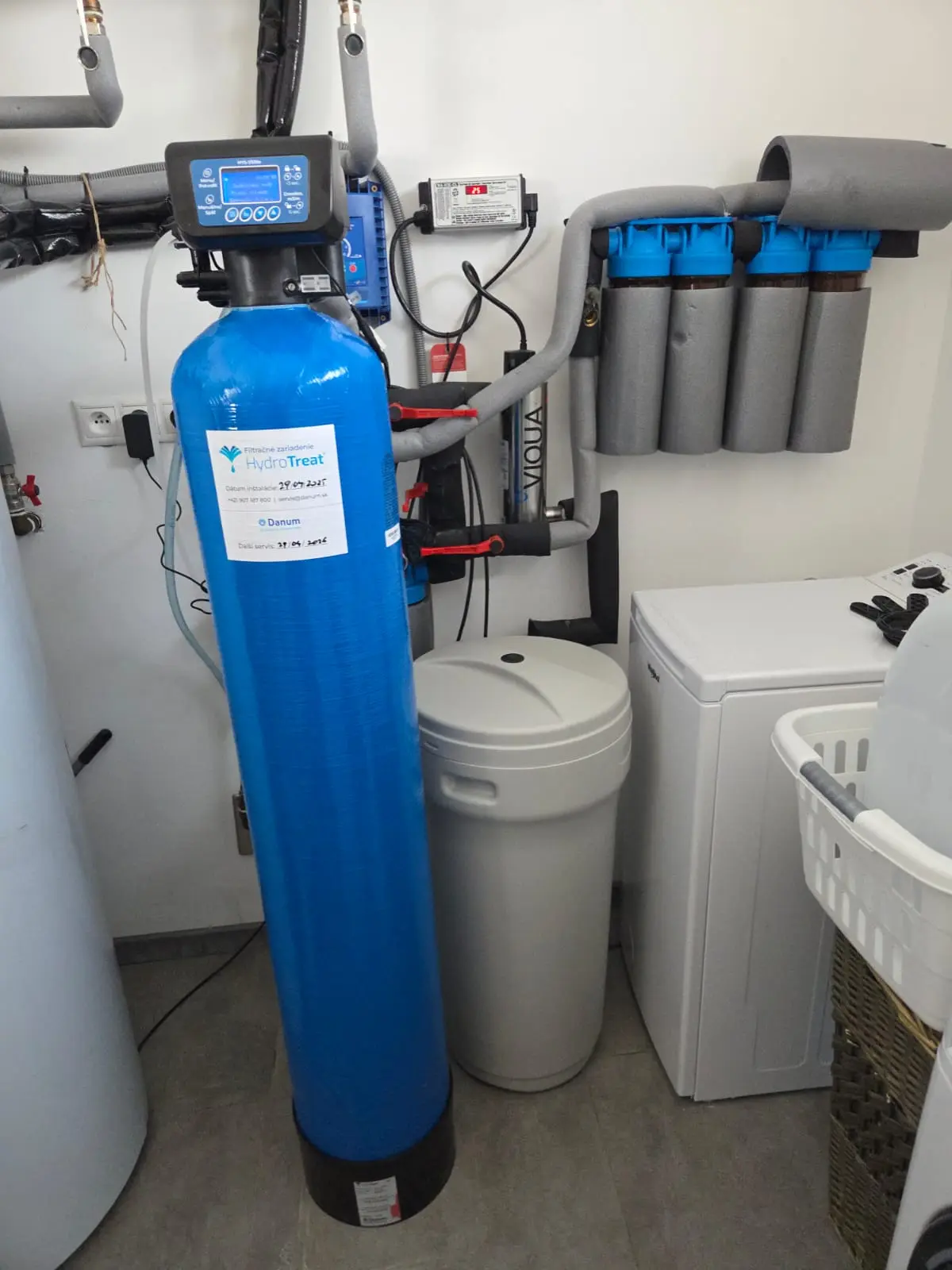
Family House – Jakubov, Malacky District
Result of the initial analysis
The analysis showed particularly elevated levels of manganese and ammonium ions:
ammonium ions: 2.1 mg/l
manganese: 558 µg/l
CHSK-Mn: 5.0 mg/l
color: 21.5 mg Pt/l
patch: TON 3
The laboratory marked these parameters as unsatisfactory.
Proposed solution:
HydroTreat ELITE 1.3 Ecomix C. UV disinfection has already been part of the existing system.
In the design, we took into account the combination of increased manganese, ammonium ions, and sensory water issues.
Implementation: April 2025
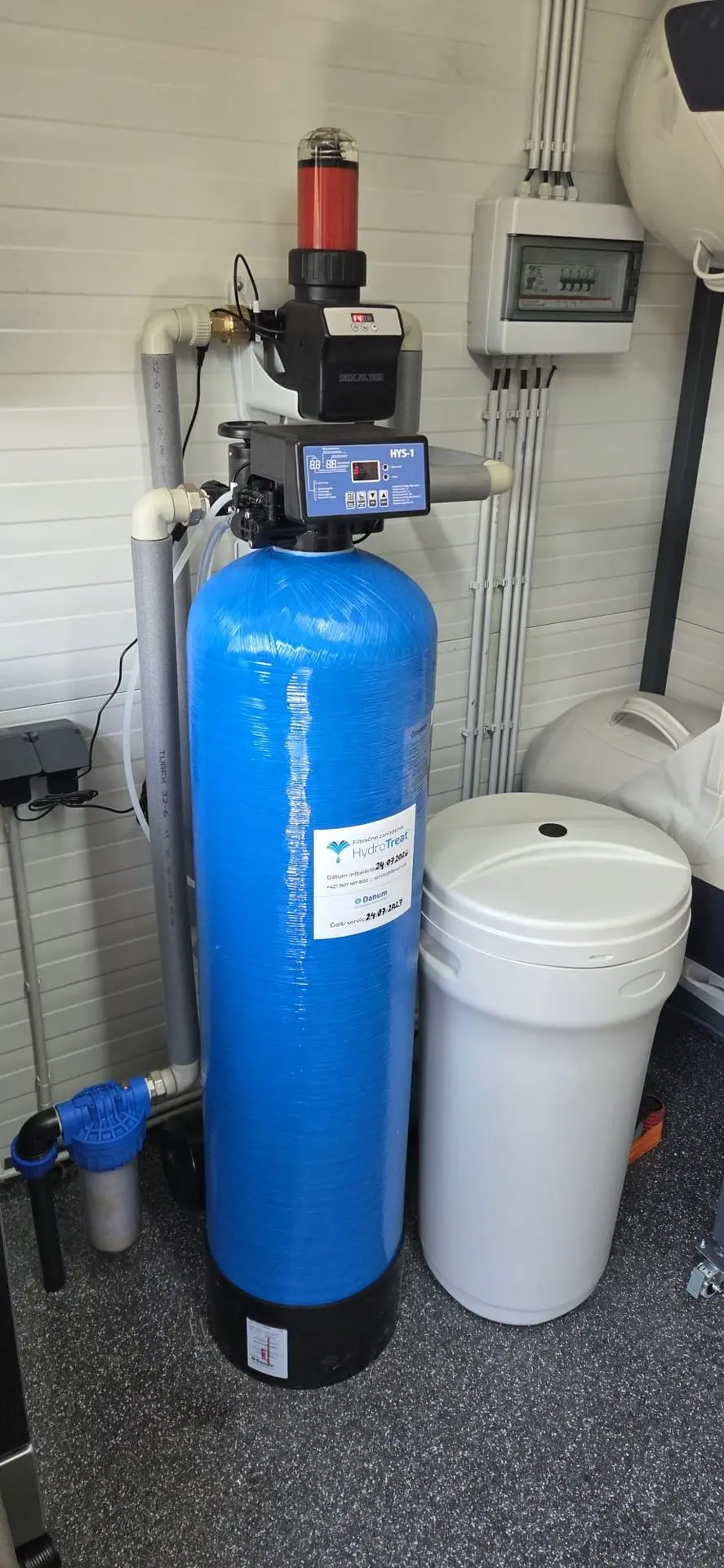
Family House – Veľký Meder
Result of the initial analysis
Among the main parameters relevant for the design of the technology were:
iron: 0.91 mg/l
manganese: 154 µg/l
turbidity: 12.6 FNU
All three values exceeded the respective limit values stated in the laboratory report.
Proposed solution:
DFA-1A + HydroTreat ECONOMY 1.7 Ecomix C (1248EC/HYS1) + bypass.
The solution was designed according to the specific composition of the water and the required operation of the family house.
Implementation: July 2026
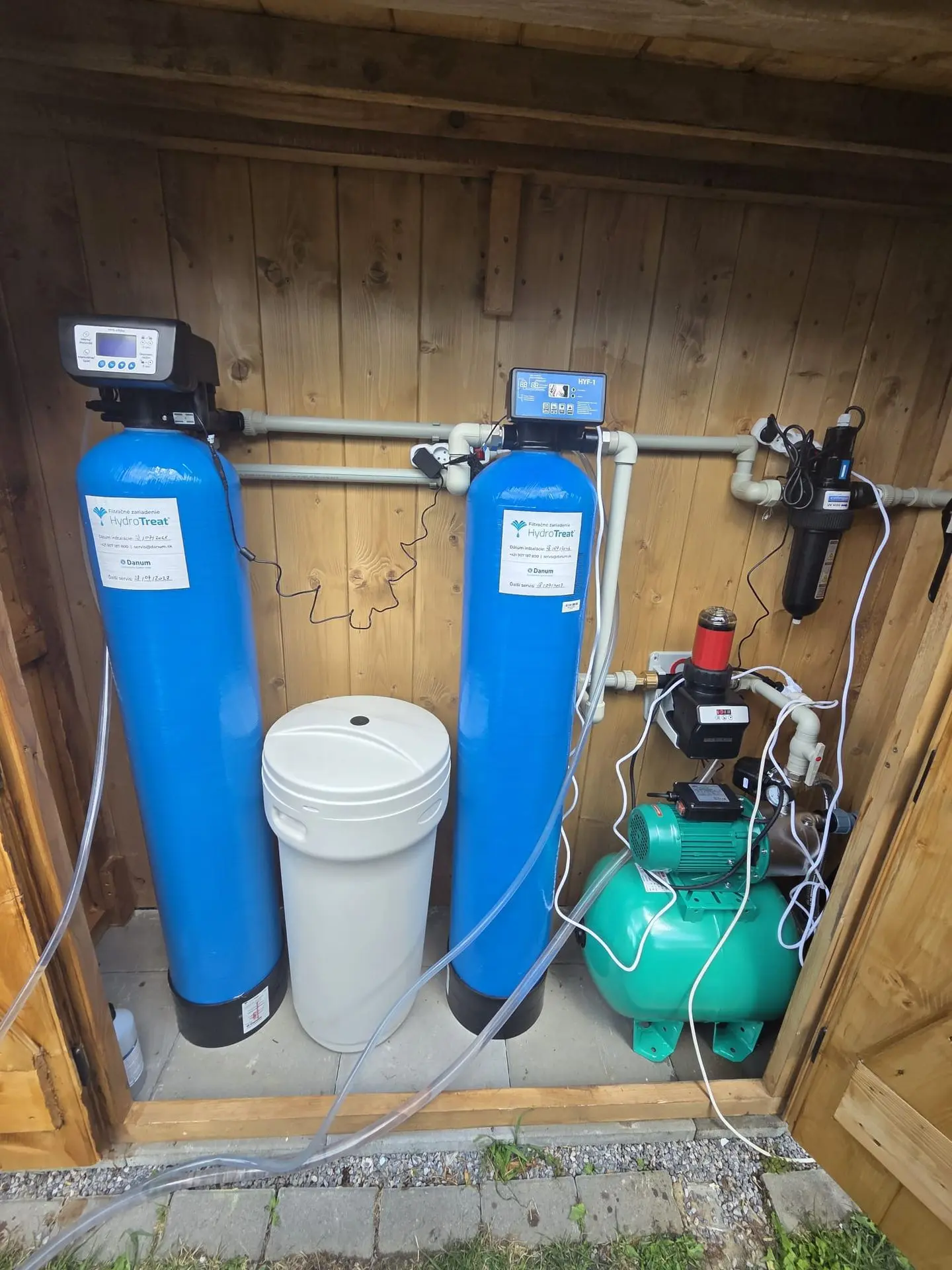
Family House – Párnica, Dolný Kubín District
Result of the initial analysis
The analysis demonstrated significant microbiological contamination and elevated values of several parameters:
coliform bacteria: >300 CFU/100 ml
manganese: 111 µg/l
turbidity: 8.42 NTU
CHSK-Mn: 3.56 mg/l
Proposed solution:
DFA-1A + Turbifilt 42 l + HydroTreat ELITE 1.3 Ecomix C + Cintropur UV 4100 + well disinfection.
We designed the system as a multi-stage solution with regard to microbiological contamination, manganese, turbidity, and other characteristics of the incoming water.
Implementation: July 2026
Frequently Asked Questions
Not always.
A regular water softener primarily addresses hardness. If the water also contains iron, manganese, ammonium ions, or other substances, a different resin or separate treatment stages may be necessary.
First, it is necessary to choose an appropriate scope of analysis based on the purpose of water use.
On the water analysis page, you can choose a suitable option or contact us if you are unsure.
The scope depends on whether the water is to be potable, utility, or technological, and on the observed issues.
For the design of the technology, we primarily need parameters that influence the selection and sizing of filtration stages.
Not automatically.
The UV lamp addresses microbiological contamination, but it does not remove nitrates, iron, manganese, hardness, turbidity, or other chemical substances.
Before the UV device, the water must have suitable quality and clarity.
Not for every project.
We can prepare many proposals based on the water analysis, completed form, and photographs. In the case of a more complex object or unclear technical conditions, a personal inspection may be necessary.
Automatic filters and softeners drain water during backwashing or regeneration.
Therefore, we need to know if there is a sewer, septic tank, drainage system, wastewater treatment plant, or another suitable method of disposal available.
It depends on the technology.
The control unit, UV lamp, dosing pump, compressor, or other components may require electricity.
The equipment must be accessible for servicing, protected from frost, and positioned according to the technical requirements of the specific technology.
In the design, we also assess the space, electricity, and the possibility of water drainage.
A simple solution may consist of a single filter. A complex treatment system may include multiple filtration columns, a tank for salt or chemicals, a UV device, and other components.
The dimensions therefore depend on the specific design.
Yes.
In some cases, it is more appropriate to treat the entire object, while in others, only the drinking water in the kitchen. The decision depends on the problem, consumption, and desired outcome.
In many cases, yes.
First, we need to identify the device, its components, and its current condition. Then we can assess the options for servicing, replacing the cartridge, or replenishing the system.
Yes. We provide installation and service of equipment throughout Slovakia.
The service interval depends on the technology used, the quality of the incoming water, consumption, and operating conditions. For many household devices, we recommend a professional check approximately once a year. The specific interval will be determined based on the setup and usage method.
Yes.
The control analysis will allow us to verify whether the non-compliant parameters behind the device have been reduced to the required level.
Do you have a water analysis? Please send us the documents
Fill out the form with information about the water, the property, and the desired method of use.
Based on the materials, we will assess possible solutions and prepare a price quote for your property.
I have a water analysis - I want a price quoteI still don't have the water analysis
If you do not know some technical details, that's okay. Please indicate them in the form as "I don't know," and our colleagues will provide you with the necessary information.