When is water analysis necessary?
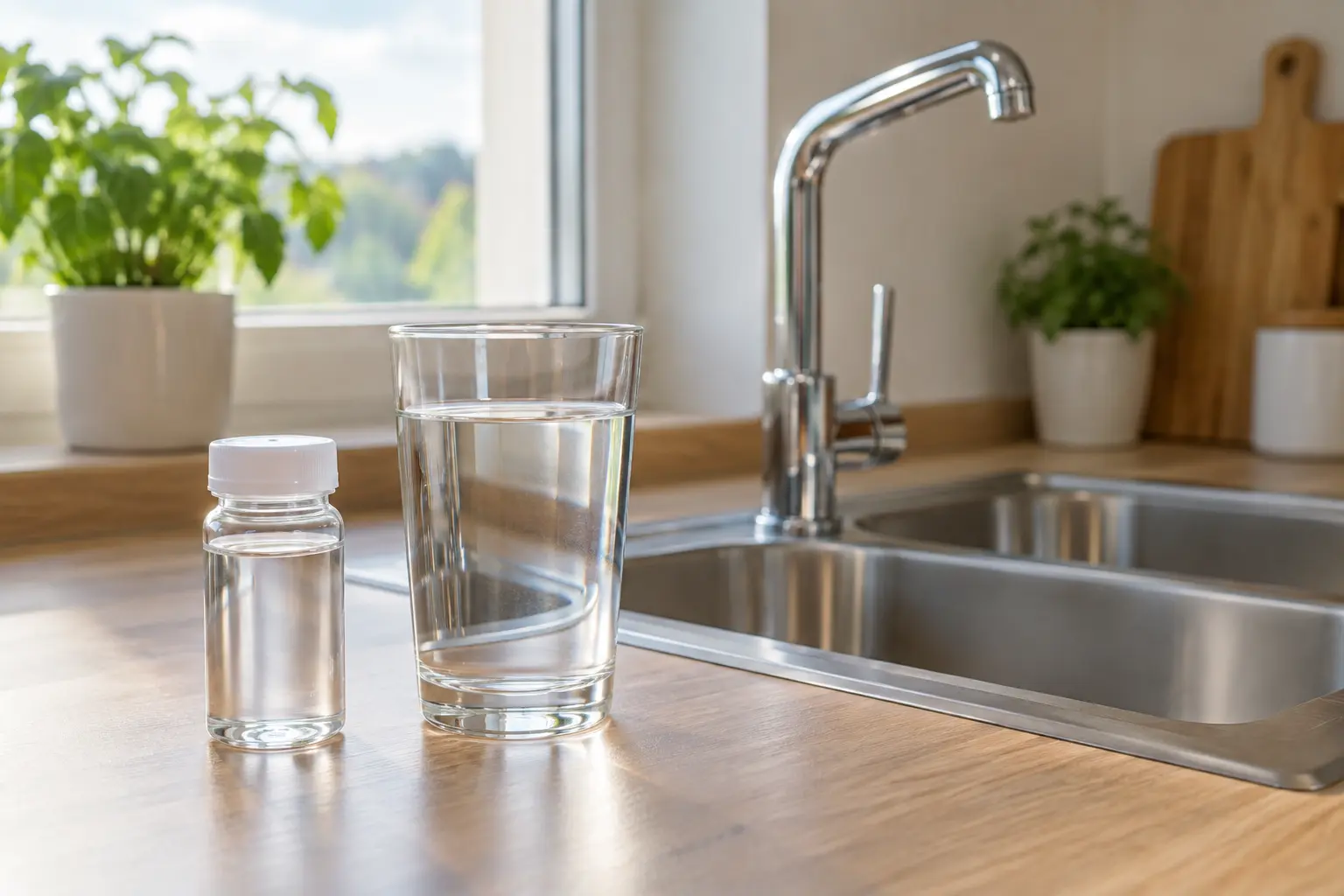
Water analysis makes sense whenever you need to reliably determine its quality or decide on the next steps. For well water, laboratory testing is especially important before using the water for drinking, after a flood or intervention in the well, when there are changes in appearance, taste, or odor, and before proposing water treatment. The appearance of the water alone is not enough – even clear, odorless water can contain substances or microorganisms that you won't detect without analysis..
When to not postpone water analysis
Before the first use of water from a new or restored well
If you want to use water from the well for drinking, cooking, or food preparation, its quality must first be verified. The analysis results will show the status of selected microbiological and physicochemical indicators at the time of sampling.
The scope of the examination should be chosen according to the purpose of the water, local conditions, and potential sources of contamination. The basic scope may not capture all substances that could be relevant in a specific location.
After a flood or suspicion of well contamination
If the well has been flooded, do not use the water for drinking or cooking until the well has been sanitized and subsequent testing confirms satisfactory results.
The inspection is also appropriate when the well has not been directly flooded, but is located in an area affected by flooding or there is another reason to suspect that contamination may have entered the source.
After the repair, cleaning, or prolonged shutdown of the well
Intervention in the well can change the conditions in the source. Therefore, analysis is important after repair, cleaning, remediation, or after a longer period when the well has not been used.
In a microbiological problem, disinfection alone is not decisive. It is important to subsequently verify whether the desired result has actually been achieved.
In case of a change in color, turbidity, taste, or odor
A sudden or unusual change in the properties of water is a reason for inspection. Brown coloring, turbidity, sediments, or odor can have multiple causes, and the symptom alone is not sufficient to determine the appropriate technology.
The analysis helps to distinguish which indicators are truly problematic and whether the cause lies in the source itself, in the distribution system, or in the existing water treatment equipment.
After an unsatisfactory previous result
If the previous analysis showed an unsatisfactory result and a well repair, disinfection, or water treatment followed, the outcome of the intervention needs to be verified.
It is not always necessary to automatically repeat the same scope of examination. The control analysis should be adapted to what has been discovered, what intervention has been performed, and for what purpose the water is used.
How often to check the water from the home well
The Public Health Authority of the Slovak Republic recommends checking the water in household wells approximately 1 to 2 times a year, ideally at different times of the year. If the water quality does not change over the long term, the interval can be extended depending on the circumstances.
However, this is not a universal frequency suitable for every well. More frequent monitoring may be meaningful in:
- changes around the well,
- floods or heavy rains,
- construction interventions,
- damage to the well,
- change in the way the resource is used,
- repeated unsatisfactory results,
- changes in taste, color, odor, or turbidity of water.
It is useful to keep a simple record of the results of analyses, cleaning, and repairs of the well. In case of another problem, it is possible to compare whether it is a new phenomenon or a longer-term trend.
When does it make sense to analyze water from a public water supply
The water supplied by the public water system is subject to a control and monitoring system. Therefore, an average household does not need to conduct its own laboratory analysis just because it is connected to the public water supply.
However, self-monitoring may be justified if:
- the properties of water in the house have unusually changed,
- you suspect a problem with the internal wiring,
- water shows a change after a longer shutdown of the facility,
- would you like to check a specific indicator,
- You need to compare the water before and after the existing water treatment device.
In that case, it is important to correctly determine the sampling location. The result from the house entrance may answer a different question than a sample taken from a specific faucet.
Water analysis before selecting equipment
When it comes to well water, the equipment should not be selected solely based on a visible sign or one known parameter.
For example, brown coloring alone does not determine the cause of the problem, and the odor may not come directly from the well. When designing the treatment, factors such as pH, pressure, flow rate, water consumption, installation location, and the purpose of the treated water can also be significant in addition to the analysis itself.
The correct order is:
- determine the source and purpose of water,
- to obtain the current analysis,
- evaluate related indicators,
- check the technical conditions,
- only then choose the appropriate method of adjustment,
- after adjustment, verify the result as needed.
The analysis is therefore not just a document for the laboratory. It is one of the fundamental bases for making correct decisions.
Official analysis and preliminary inspection are not the same
If you need the result for approval or as documentation for a public authority, the method of sampling and the required scope of examination should be verified before ordering the analysis.
The Public Health Authority of the Slovak Republic states that for analyses intended for the approval process or as documentation for state administration authorities, a sample collection must be conducted.
On the contrary, in some private tests, the well owner can also take the sample themselves. However, they must follow the laboratory's instructions, as improper sampling, unsuitable containers, or mishandling of the sample can distort the results.
What scope of analysis to choose
There is no one range of analysis suitable for every situation.
When choosing, it is important to consider especially:
- water source,
- purpose of use,
- the history of the well,
- previous results,
- possible sources of pollution in the area,
- symptoms that you observe,
- possible existing water treatment,
- whether it is for private inspection or official purpose.
If, for example, there is a specific geological or anthropogenic risk in the area, it may be necessary to supplement the indicators beyond the usual basic analysis.
What one analysis won't tell you
The laboratory result describes a sample taken at a specific time and place. It does not automatically mean that the quality of the well water will be the same throughout the year.
The result cannot be interpreted as confirmation of the absence of all possible substances or microorganisms. The laboratory will only evaluate the indicators that were included in the analysis.
Therefore, when making decisions, it is important to know not only whether the measured values were satisfactory, but also:
- what was actually investigated,
- where the sample was taken from,
- when was the sample taken,
- whether it is raw or already treated water,
- what was the purpose of the analysis.
Practical next step
If you are unsure whether you need an analysis, start with four pieces of information: water source, purpose of use, reason for testing, and the most recent available result.
For a well without current analysis, after an extraordinary event, or before proposing water treatment, laboratory testing is generally the correct first step. For official purposes, verify the required sampling method and scope of examination before placing an order.
Editorial Office Danum s.r.o