Water Softening and Its Impact on Health: What Changes in Water
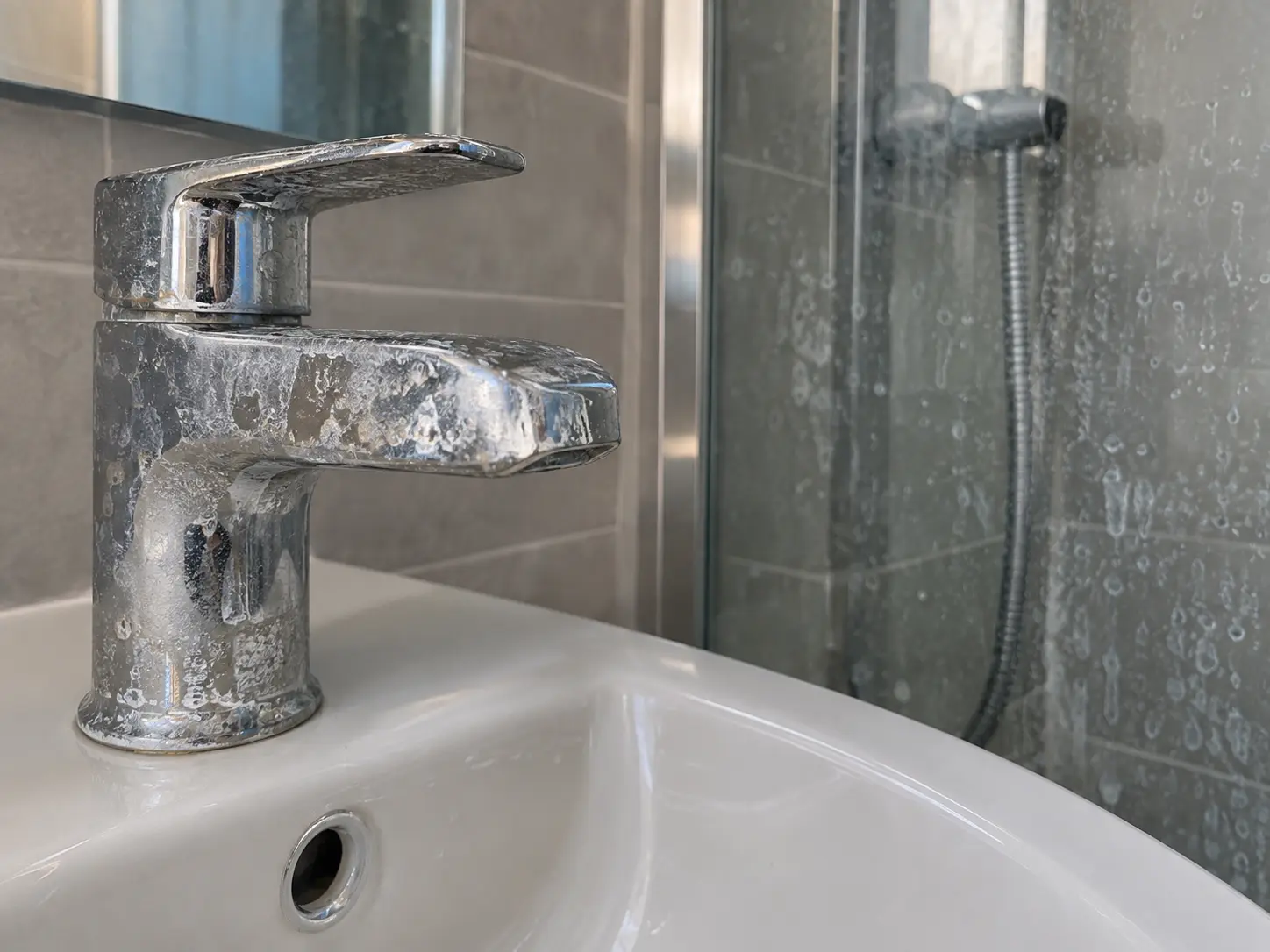
Water softening using an ion exchanger is not just a technical solution to hard water. It also changes the mineral composition of the water: it reduces the levels of calcium and magnesium and, with a typical sodium ion exchanger, replaces them with sodium ions.
However, this does not mean that hard water is automatically "healthier" or that softened water is automatically unsuitable for drinking. When making a decision, one should consider the input composition of the water, the desired level of softening, the method of connection, and what the water will be used for.
What a water softener actually changes
The hardness of water is primarily caused by dissolved ions of calcium and magnesium. In conventional softening using a sodium ion exchanger, these ions are captured in the ion exchange resin, and instead, sodium ions are released into the water.
The result is water with lower hardness, which creates fewer calcium deposits. At the same time, it contains less calcium and magnesium and more sodium than before softening.
The greater the hardness the device removes, the greater the change in mineral composition can be. Therefore, drinking water after softening cannot be assessed solely based on the fact that limescale no longer forms on faucets or appliances.
Is hard water a health problem?
The hardness of water should not be confused with chemical or microbiological contamination.
WHO does not establish a health guideline value for water hardness and states that hardness at concentrations commonly found in drinking water does not in itself pose a health problem. However, hardness can significantly affect the taste of water, the formation of deposits, and the operation of pipes, heaters, and other equipment.
Hard water can therefore be a technical and comfort issue even when it is safe to drink according to other monitored indicators.
On the contrary, soft water does not automatically mean higher quality or safer drinking water. The potability is determined by a whole set of relevant indicators, not just hardness.
What is the significance of calcium and magnesium in water
Calcium and magnesium are common components of drinking water, and water can contribute to their overall intake. However, their contribution to overall nutrition depends on the concentration in the water as well as the individual's diet.
WHO warns that drinking water can be one of the sources of calcium and magnesium. However, it does not establish a universal minimum or maximum health value for hardness. Epidemiological observations regarding the possible relationship between water hardness or magnesium and certain health outcomes, according to WHO, do not in themselves demonstrate a causal relationship.
Therefore, it is not correct to simplify the topic to the claim that the harder the water, the better it is for health.
What do the Slovak requirements stipulate
The Slovak Regulation No. 91/2023 Coll. distinguishes between limit and recommended values in the mineral composition of drinking water.
The limit value for sodium is set at 200 mg/l.
Regarding calcium and magnesium, the regulation also works with recommended values:
- magnesium: 10 to 30 mg/l as the recommended value,
- calcium: more than 30 mg/l as a recommended value,
- sum of calcium and magnesium: 1.1 to 5.0 mmol/l as the recommended range.
For magnesium, the limit value is also stated as 125 mg/l.
The requirement for water treatment is also important. If the water being treated has concentrations of calcium or magnesium higher than the recommended values, the regulation states that in the treated drinking water, the concentration of calcium must not fall below 30 mg/l and the concentration of magnesium must not fall below 10 mg/l.
The recommended value is not the same as the limit or the highest limit value. The mere failure to comply with the recommended value according to the regulation does not automatically exclude the use of water as drinking water.
Why does the sodium content increase after softening
In a sodium ion exchanger, calcium and magnesium are exchanged for sodium. Therefore, the increase in sodium content mainly depends on:
- incoming water hardness,
- of it, what part of the hardness is removed,
- settings for mixing raw and softened water,
- original sodium content in water.
It cannot be said, therefore, that every water softener adds the same amount of sodium to the water.
In very hard water and significant softening, the difference can be more substantial than in moderately hard water or partial softening. If the water is to be regularly used for drinking and cooking after softening, the resulting composition can be verified through analysis.
Should drinking water also be softened?
There is no one right scheme for every household.
In some buildings, the entire distribution is supplied with softened water. Elsewhere, the kitchen drinking branch is left unsoftened or a set mixing of softened and raw water is used.
The decision depends mainly on:
- entry hardness,
- concentrations of calcium, magnesium, and sodium,
- required residual hardness,
- water source,
- the purpose of individual delivery points,
- technical possibilities of distribution.
The number of people in the household or the hardness level alone is not sufficient to assess the quality of well water. When using a private source, other relevant indicators of analysis must also be considered.
Is complete softening always the best?
No.
The goal of softening does not have to be zero hardness. Very low hardness may be unnecessary considering the purpose of the treatment, and when it comes to drinking water, its resulting mineral composition must also be taken into account.
The correct setting is therefore not a universal number. It depends on the input water, technical objectives, distribution systems, and requirements for the resulting water.
If the goal is primarily to protect the heater, exchangers, batteries, and appliances from deposits, it is not automatically necessary to change the drinking water more than is needed for this purpose.
When does a separate drinking branch make sense
Separating water for technological and drinking purposes can be practical when the requirements for these two branches are significantly different.
A typical example is a household with very hard water, where a large portion of the water is softened for the protection of technology and comfort, but a different mineral composition is required for kitchen use.
However, it is not a mandatory or universal solution. With a different composition of the incoming water, whole-house softening with a set residual hardness may be appropriate.
The decision should therefore be made only after determining the initial state of the water and the goal of the adjustment.
What to check after setting up the softener
After putting the water softener into operation, it is not enough to evaluate the result solely based on whether visible limescale has stopped forming.
The purpose is primarily to verify:
- hardness of the incoming water,
- water hardness after softening,
- mixing or bypass settings, if used,
- in the relevant situation, the content of calcium, magnesium, and sodium,
- proper regeneration and operation of the device.
When using well water, it is necessary to evaluate other water parameters before designing a water softener. The softener addresses hardness, but it cannot be automatically assumed that it will solve other issues related to the water source.
How to proceed before selecting or setting up a water softener
If you only know the hardness level, checking the current analysis from the water supplier can be a good first step for water from the public water supply.
When dealing with well water, it is advisable to rely on the current laboratory analysis. The project logic of Danum also follows the principle that technology should not be chosen in the order of "symptom → device," but only after measuring and interpreting the conditions.
If the water is to be used for drinking after treatment, the goal should not be just the lowest possible hardness. The final quality of the water is important, as well as whether the settings correspond to the specific use.
Danum s.r.o.